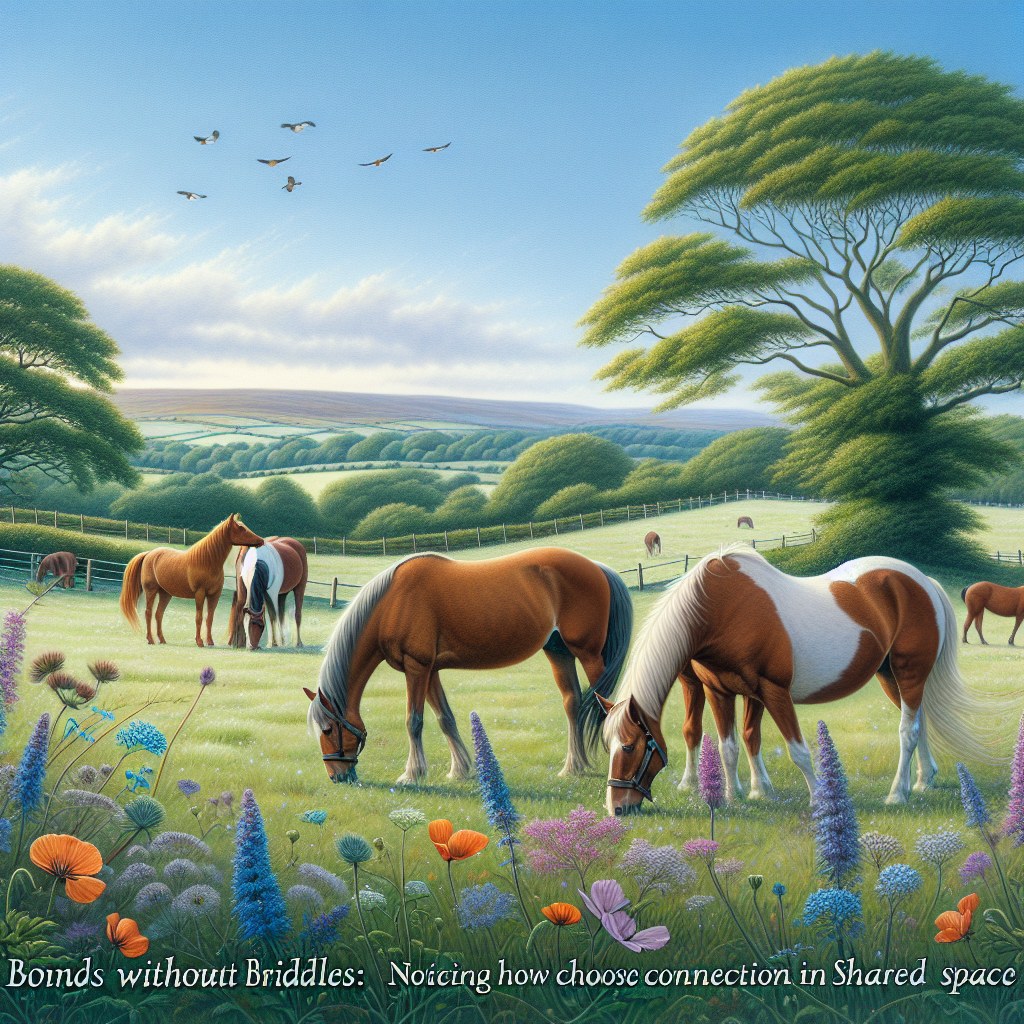
The Invitation in the Meadow: Letting Horses Include Us Without Riding

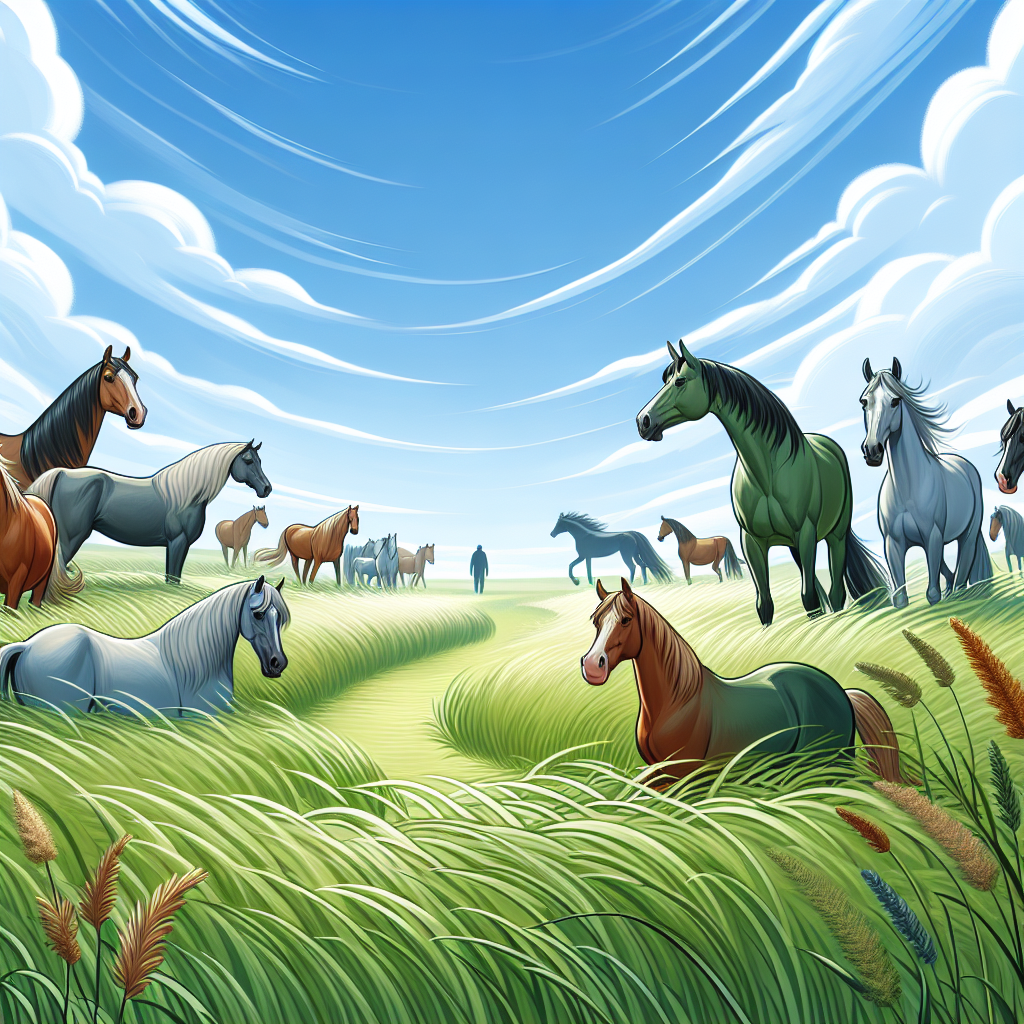
Hook
What if “being with horses” isn’t something we do to them—an activity we organize—but something we are occasionally allowed into?
When riding and training are off the table, the relationship stops being about compliance and starts being about access: access to their space, their routines, and their small, everyday decisions. In that world, an “invitation” is not a romantic idea. It’s a practical, observable shift: a horse chooses to stand near you, remains settled when you arrive, or calmly moves with you without being directed.
This post is about how to notice those moments—and how to set up your presence so that an invitation is even possible.
1) Invitation is a choice, not a performance
In a herd, much of life is built on preference. Horses repeatedly show who they want near them and who they can relax around. If we want coexistence without riding or training, we can treat our own presence the same way: something a horse can accept, tolerate, or seek out.
A useful lens is proximity. Not the dramatic kind—no big gestures required—but repeated pairing. Who chooses to stand close, who rests within reach, who drifts away and then returns. Over time, this is where relationships become visible.
For humans, the key is to stop trying to “get” connection and instead notice where it already appears. An invitation often looks almost boring: a horse remains nearby and soft rather than leaving, or quietly adjusts their position so you can share the same patch of calm.
2) Read the herd’s “yes” in low-volume signals
Horses rarely need a loud argument to settle everyday decisions. Much of their communication is subtle: ears shifting, a head turn, a change in body angle, one step to the side. When we enter their space, those same quiet signals tell us whether we’ve been included or merely tolerated.
This matters because invitation is often expressed in low volume.
- A horse angles their body to keep you in their field of attention rather than turning away.
- Ears and head orientation linger toward you without tension.
- They step aside without rushing, creating room that feels cooperative rather than pressured.
You don’t need to “do” anything with these moments. The point is to recognize that a horse is communicating comfort and choice.
And the reverse is equally informative. A small head turn away, a subtle increase in distance, or a consistent habit of placing another horse between you and them can be a clear “not right now.” Coexistence deepens when we respect those messages the first time.
3) Affection doesn’t have to be cuddling: look for calm togetherness
Humans often look for obvious affection: dramatic greetings, overt interest, a horse who comes running. But in herds, closeness can be gentle and understated.
Affiliative behaviors—like mutual grooming, calm following, and shared resting—show how horses build companionship. While we are not another horse, we can still observe what “togetherness” looks like in their world.
Invitation may show up as a horse:
- choosing to rest near where you are standing,
- remaining settled while you are present (rather than becoming vigilant),
- calmly walking in the same direction as you without being driven.
The important part is the emotional tone: unhurried, unforced, and repeatable. A single moment can be coincidence; a pattern suggests a relationship. If a horse consistently chooses quiet proximity when nothing is asked of them, that is a form of welcome.
4) The hay pile is a social classroom (and we can learn quietly)
If you want to understand real social structure, watch what happens around resources. Not to “rank” horses, but to see how they negotiate.
Pay attention to tolerance: who yields, who is allowed to eat nearby, who can pass through a narrow point without triggering tension. Horses often resolve these situations with minimal fuss—one horse shifts weight, another pauses, someone steps aside. Those small adjustments reveal who feels comfortable with whom, and in which context.
For humans, this has a direct translation: if you place yourself between a horse and their preferred route, or you hover near a resource, you may be inserting yourself into a negotiation you don’t understand.
Coexistence without riding or training becomes easier when we choose not to compete with their priorities. If a horse must repeatedly detour around us to access hay or water, we aren’t being included—we are becoming an obstacle. But if we stand in a way that allows calm passing, we’re practicing the same quiet courtesy horses offer each other.
5) Invitation through food: creating choice instead of schedules
Feeding can be a daily source of either pressure or peace. One approach described in the source material is to avoid fixed meal times and instead encourage natural foraging behavior by offering access to different kinds of hay and wild herbs.
The detail that matters here is not a “method,” but a philosophy: providing an environment where horses can select what they need.
In coexistence terms, this becomes an invitation because it shifts humans from being gatekeepers to being facilitators. When horses can move, browse, and choose, they don’t have to crowd a person to secure their needs. They can keep their social spacing intact. They can focus on each other and on foraging, rather than on controlling access to a single timed event.
And something subtle happens for the human, too: your presence becomes less charged. If you’re not the trigger for a scheduled food rush, you can be near them without instantly becoming “the dispenser.” That makes room for a different kind of relationship—one where a horse might approach because they’re comfortable, not because they’re counting minutes.
6) Coexistence as an ongoing permission
People sometimes squeeze horse relationships into simple stories: a permanent “boss,” a single leader, a fixed pecking order. Herd life is usually more nuanced than that. Who moves whom can change with circumstances and with the specific resource in question. Movement decisions can come from different individuals depending on what’s happening.
If we bring that nuance into human–horse life, invitation stops being something we win once and keep forever. It becomes ongoing permission.
Some days, a horse may be open to sharing space. Another day, the same horse might choose distance—because someone else in the group matters more in that moment, because a resource is important, or simply because their preference shifts. None of that has to be interpreted as rejection or as a “problem” to fix.
The simplest, most respectful version of coexistence looks like this: we watch first. We let the herd show us how they maintain calm through tiny negotiations. We arrange our presence so we are easy to move around. We notice repeated closeness when it’s offered.
In that space, invitation becomes real: a horse includes you the way they include each other—through steady comfort, quiet permission, and the choice to be near.