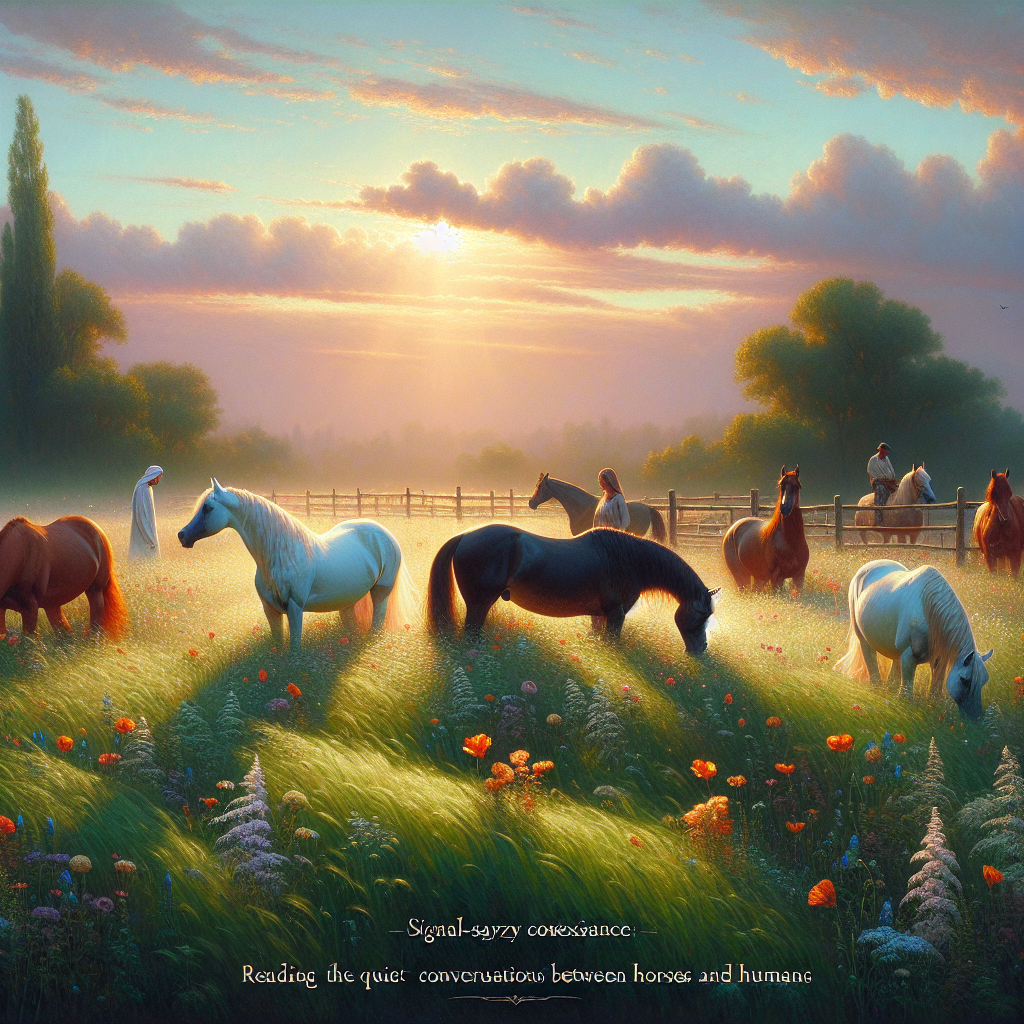
Signal-Savvy Coexistence: Reading the Quiet Conversations Between Horses and Humans
Hook
Horses don’t require constant drama to live together. A stable herd isn’t primarily maintained by constant fighting; the visible “order” often comes from relationships that reduce friction. When humans share space with horses, we step into that same world—one built on signals that manage distance, timing, and tolerance. Coexistence becomes easier when we stop searching for a simple “boss” story and start noticing the quieter conversations.
Coexistence starts with noticing what actually holds a group together
It’s tempting to explain everything in one sweeping idea: the herd has an “alpha,” and everyone else falls in line. But that story can distract us from what’s right in front of us. In horse groups, the structure that keeps things steady is often not a constant chain of fights, but a web of relationships that reduce friction.
For humans, this matters because it shifts what we look for. Instead of scanning for “who dominates,” we can watch for signals of comfort and cooperation: who stands near whom, who tolerates closeness, who chooses distance, and how horses use timing to avoid conflict. The stability you see is frequently a signal that many small interactions are working well.
Dominance is a signal exchange, not a label you pin on a horse
“Dominance” is easiest to misuse when we treat it as a permanent personality label. The knowledge base pushes a different view: dominance is situational and relationship-based—who yields to whom around specific resources. That means dominance is often expressed through signals of yielding and taking space, not through constant pushing or aggression.
In human coexistence, this is a helpful lens. If you enter a space assuming one horse is “dominant” in all things, you may miss the real signal: in one context that horse yields quickly, in another it doesn’t. The point isn’t to sort horses into fixed categories, but to watch what changes with the moment and with the relationship.
These exchanges—yielding, holding ground, allowing closeness—are communication. They are the herd’s way of keeping daily life from turning into a series of confrontations.
Leadership isn’t a crown—movement signals can be shared
“Leadership” also becomes less confusing when we stop imagining a single permanent boss. Movement and decisions can be distributed across individuals depending on context. In practical terms, that means different horses can initiate motion, pause, or change direction at different times, and the group responds in a way that reflects relationships and the needs of the moment.
For coexistence, this is a reminder to watch how horses decide together, rather than expecting one horse to always “lead.” Sometimes the most meaningful signals are subtle: a horse shifts, another follows, another waits, and the group reorganizes without drama. It’s not chaos; it’s shared decision-making through body language, spacing, and timing.
When humans impose a rigid “alpha hierarchy” story, we often miss the actual structure: bonds, tolerance, distance, and timing. Those are the signals that keep movement smooth.
The human body is a signal too—horses read it immediately
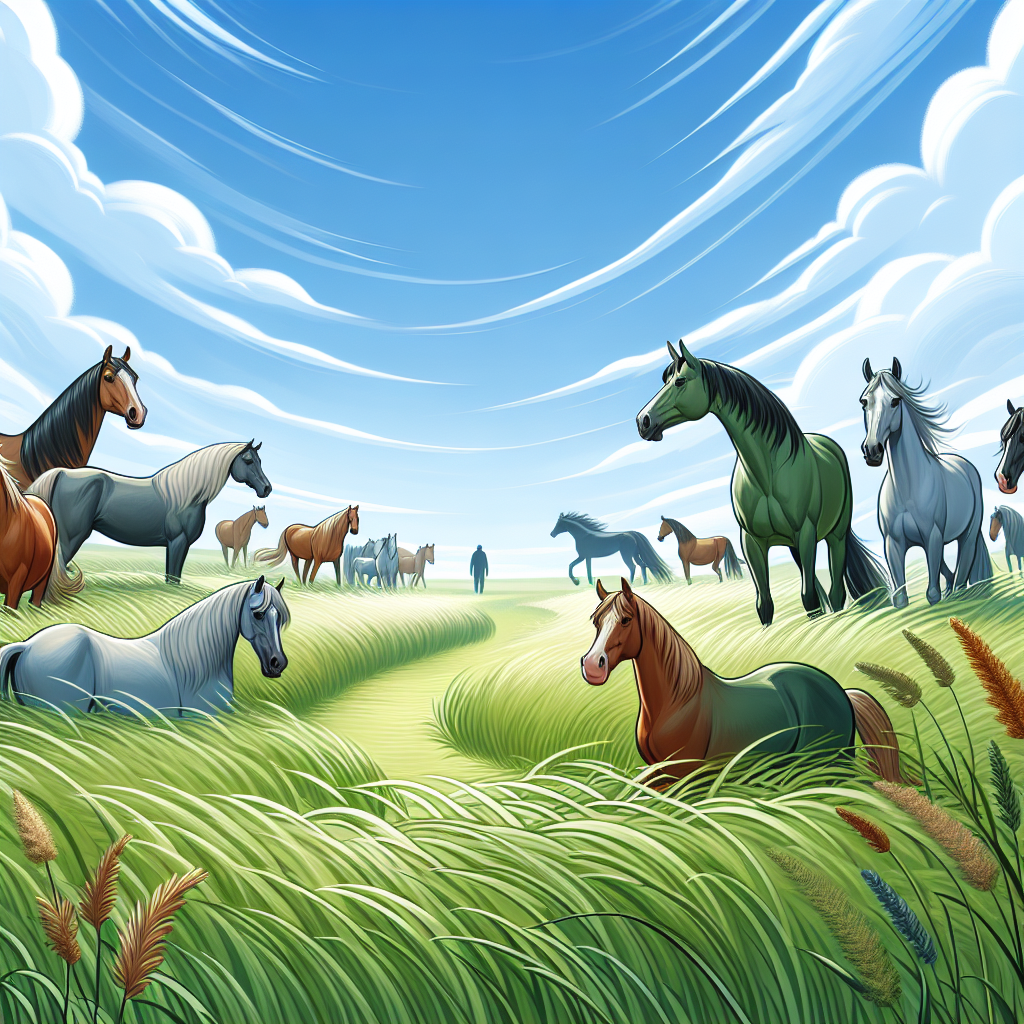
Coexisting with horses isn’t only about decoding horses; it’s also about recognizing what we broadcast. The knowledge base describes an experience many trainers report: if a person enters a pen feeling agitated—with a racing mind and tense shoulders—the horse often stays on the far side, watching cautiously. But if the person stands quietly, takes a deep breath, and invites the horse to approach with a soft look, more often than not the horse comes closer and makes contact.
Even without riding or training, this matters. It shows that our internal state is not private in a horse’s world. Horses are constantly reading our state, and our posture and energy can act like a sign that says “safe to approach” or “keep distance.”
In coexistence, the simplest adjustment isn’t a special technique—it’s aligning what you want (calm contact) with what you signal (calm presence).
Synchronization: coexistence as a shared rhythm
One of the most striking signal-based experiences described in the knowledge base is synchronization. When a person walks calmly alongside a horse, breathing and footsteps can start to align. The horse matches the human’s tempo, and the human subconsciously matches the horse’s. It becomes a non-verbal conversation—a shared dance that builds a deep sense of harmony and mutual understanding.
This isn’t about asking the horse to “do” something. It’s about what happens when two beings share space with attentiveness. Rhythm becomes a signal that both sides can read: steadiness, predictability, and the absence of pressure. In a herd, timing and distance reduce friction; between horse and human, shared rhythm can do the same.
This is also where the “lab and barn” meet. The knowledge base highlights that for every scientific paper, there are generations of careful observers who have known these truths through time with horses. Coexistence grows from that same careful observation: noticing when the horse draws nearer, when it pauses, when it relaxes into your tempo—and noticing when you unconsciously speed up, tighten, or broadcast urgency.
A practical shift: replace the “alpha story” with a signal story
When humans force a simple hierarchy narrative onto horses, they often miss the real structure: bonds, tolerance, distance, and timing. A more useful approach for everyday coexistence is to tell a different story—one written in signals.
- Bonds signal who feels safe together.
- Tolerance signals how much closeness is comfortable.
- Distance signals boundaries without needing conflict.
- Timing signals how horses avoid friction and keep peace.
- Yielding signals situational dominance without turning it into a personality verdict.
- Rhythm signals calm connection, especially when humans show up quietly.
Seen this way, coexistence is not a test of who controls whom. It’s a steady practice of noticing, softening unnecessary pressure, and respecting the signals that already keep horse society functional.
When we meet horses as signal-readers—and accept that we are signaling right back—shared space becomes simpler. Not because we dominate the story, but because we finally pay attention to the one the horses are already telling.