Who Stands Next to Whom: Reading a Herd Through Proximity Patterns

Hook
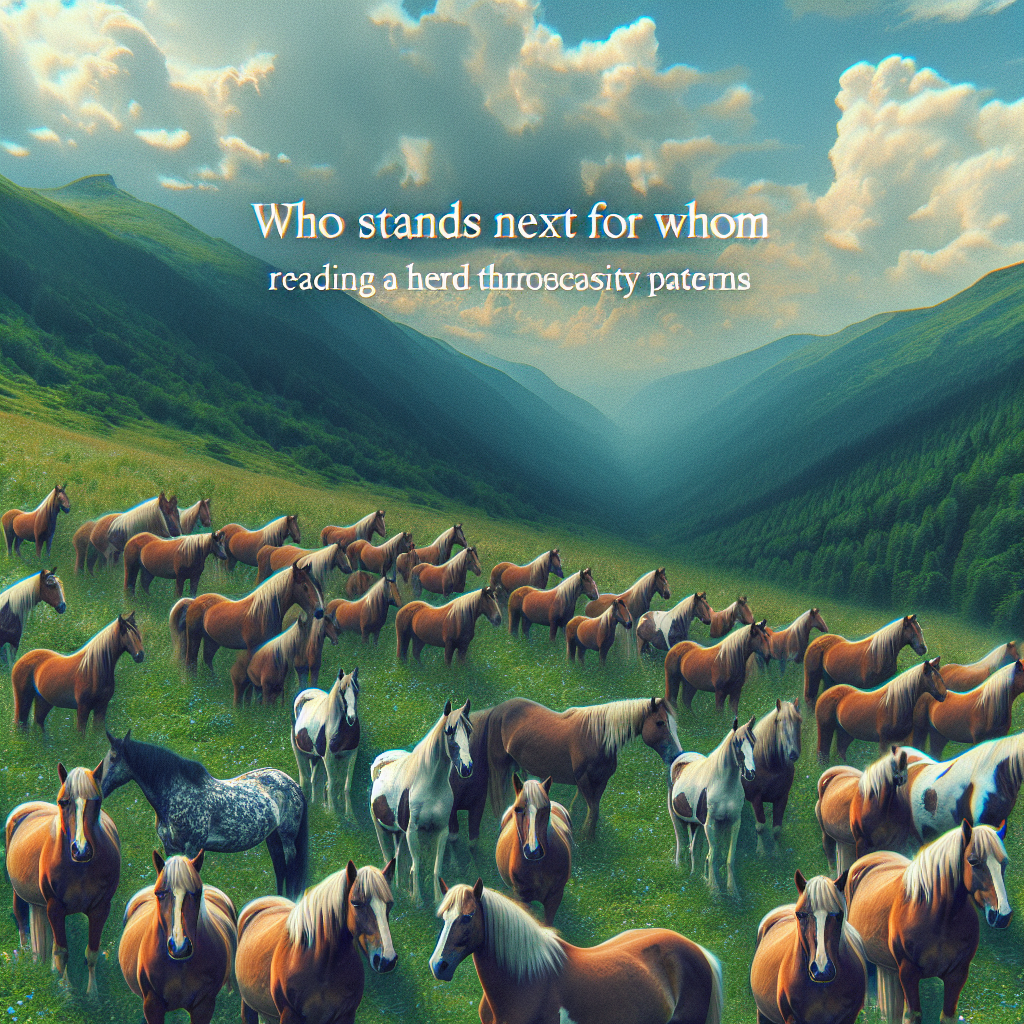
If you want to understand what’s really holding a herd together, don’t start by looking for the biggest horse “in charge.” Start by noticing something quieter: who keeps choosing to be near whom.
Basic concept
A stable herd isn’t mainly held together by constant fighting. Much of the visible “order” comes from relationships that reduce friction—horses arranging themselves through distance, timing, and tolerance.
Proximity patterns are one of the easiest field-friendly ways to see those relationships. The key is repeatability: a single moment of standing near each other can be coincidence, but the same pair repeatedly choosing to stand or rest close suggests a meaningful bond or a reliably low-tension relationship.
This matters because “dominance” isn’t a permanent personality label, and “leadership” isn’t one fixed boss. Who yields to whom—and who moves first—can shift with the situation and the resource. Proximity gives you a steadier lens: it highlights who is comfortable together before any resource pressure shows up.
What to look for (simple and specific)
- Repeated pairing: Do the same two horses consistently end up shoulder-to-shoulder when things are calm?
- Resting choices: When the herd settles, who lies down or stands relaxed near whom?
- Calm following without pressure: Who drifts after whom at an easy pace, without pinned ears or rushing?
Simple examples
- Example 1: The “always nearby” pair
Two horses repeatedly stand within a few steps of each other across the day. You don’t see dramatic gestures—just calm closeness. This often points to a relationship that reduces friction: they’re easy companions, so they choose proximity. - Example 2: The “buffer horse”
One horse is frequently seen near several different individuals, while others keep more distance from certain herd members. That can suggest this horse has broad tolerance and helps the group stay settled simply by being an easy neighbor. - Example 3: The “distance agreement”
A particular pair rarely stands close—even though neither seems aggressive. When they do pass, it’s with small, low-level signals (a head turn, a body angle change, a step aside) and then they separate again. That distance can be part of how the herd avoids escalation.
Why this beats the “alpha hierarchy” shortcut
When humans force a simple “alpha” story onto horses, they often miss the real structure: bonds, tolerance, distance, and timing. Proximity patterns let you see those quieter stabilizers—often the very things that prevent conflict from ever becoming visible.
A quick way to start observing
Pick one calm period each day and simply note: which two horses are closest, and does that pairing repeat tomorrow? Over time, those repeated choices tell you far more about herd relationships than a single dramatic moment ever will.